Sintra · Old town · Royal palace
National Palace of Sintra: tickets, hours and how to get there
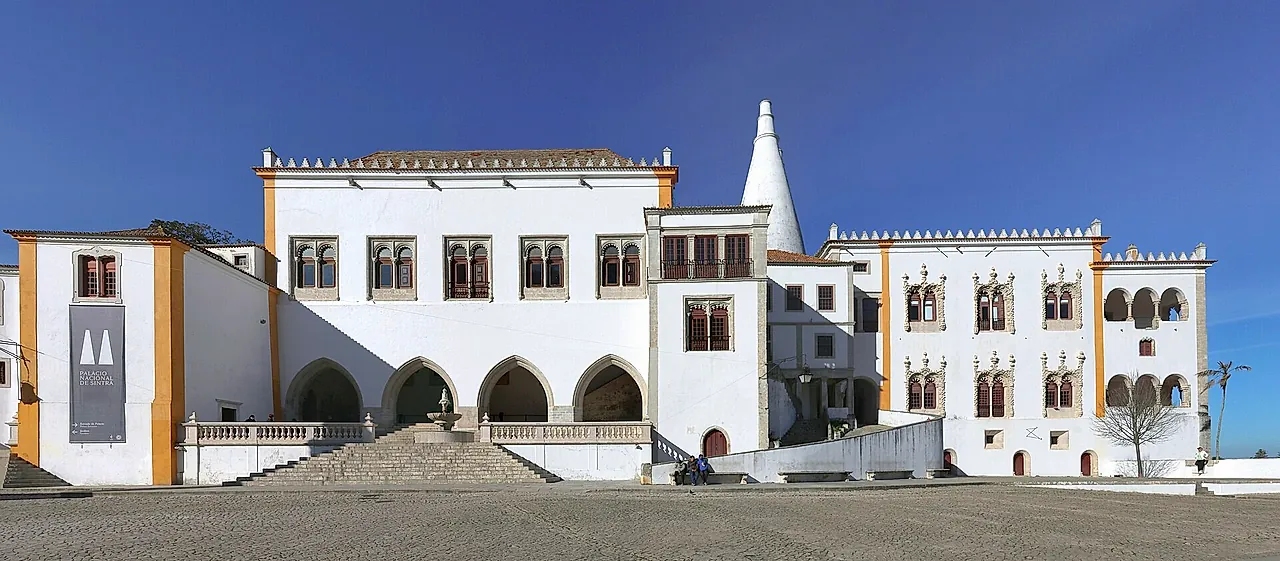
The palace with the two conical chimneys in the middle of the old town. Official and Tiqets prices side by side, and an easy half-day with Pena or Regaleira.
Today
Opening hours for every month are on the Opening hours page.
Checked against the official website on October 22, 2026 · Official source
In short
- The Essential Visit, a self-guided tour of the rooms and the gardens, costs 13 € for an adult on the official site and on Tiqets (10 € for youths and seniors, 35 € for a family). The Full Visit, which adds the rooms of Queen Maria Pia in small groups, is 35 €. Prices read on 22 October 2026.
- The palace is open 9:30–18:30 with last entry at 17:30. The ticket office closes from 12:00 to 13:00, and there are automatic ticket machines. The garden, Jardim da Preta, is free to enter.
- It is 10 to 15 minutes on foot from the station, according to Parques de Sintra. Allow 1 to 1.5 hours (our estimate). The palace is open every day except 1 January and 24, 25 and 31 December.
The two chimneys and the rooms
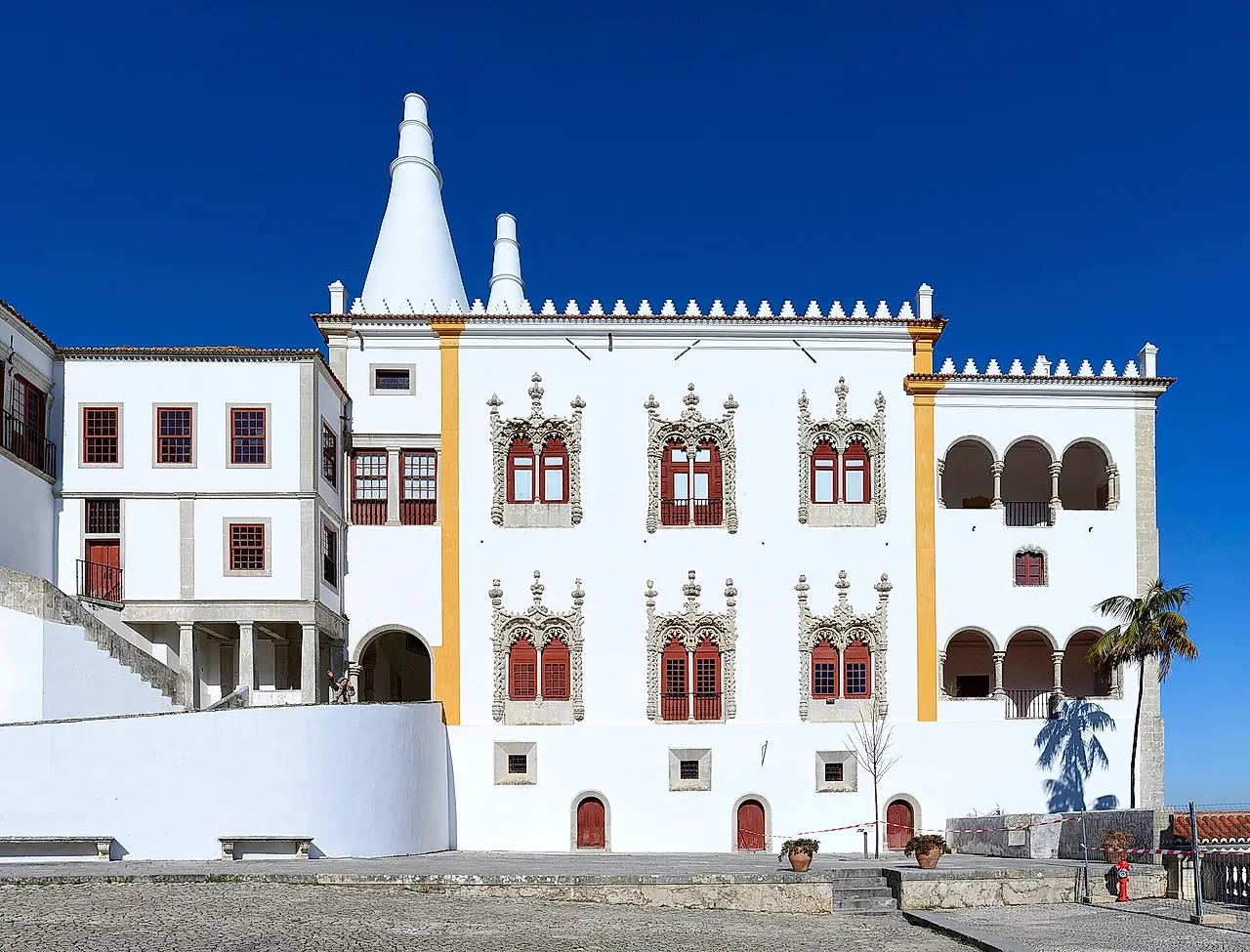
The two conical chimneys of the royal kitchens are the silhouette of Sintra. Inside, the highlights are the Swan Room, the Magpie Room, the Coat of Arms Room, the chapel, the room of Afonso VI, the central courtyard and the water grotto.
The Coat of Arms Room has a dome painted with the arms of 72 noble families, according to Parques de Sintra. Afonso VI was held prisoner in the palace from 1674 to 1683.
Azulejos and the Mudéjar tiles
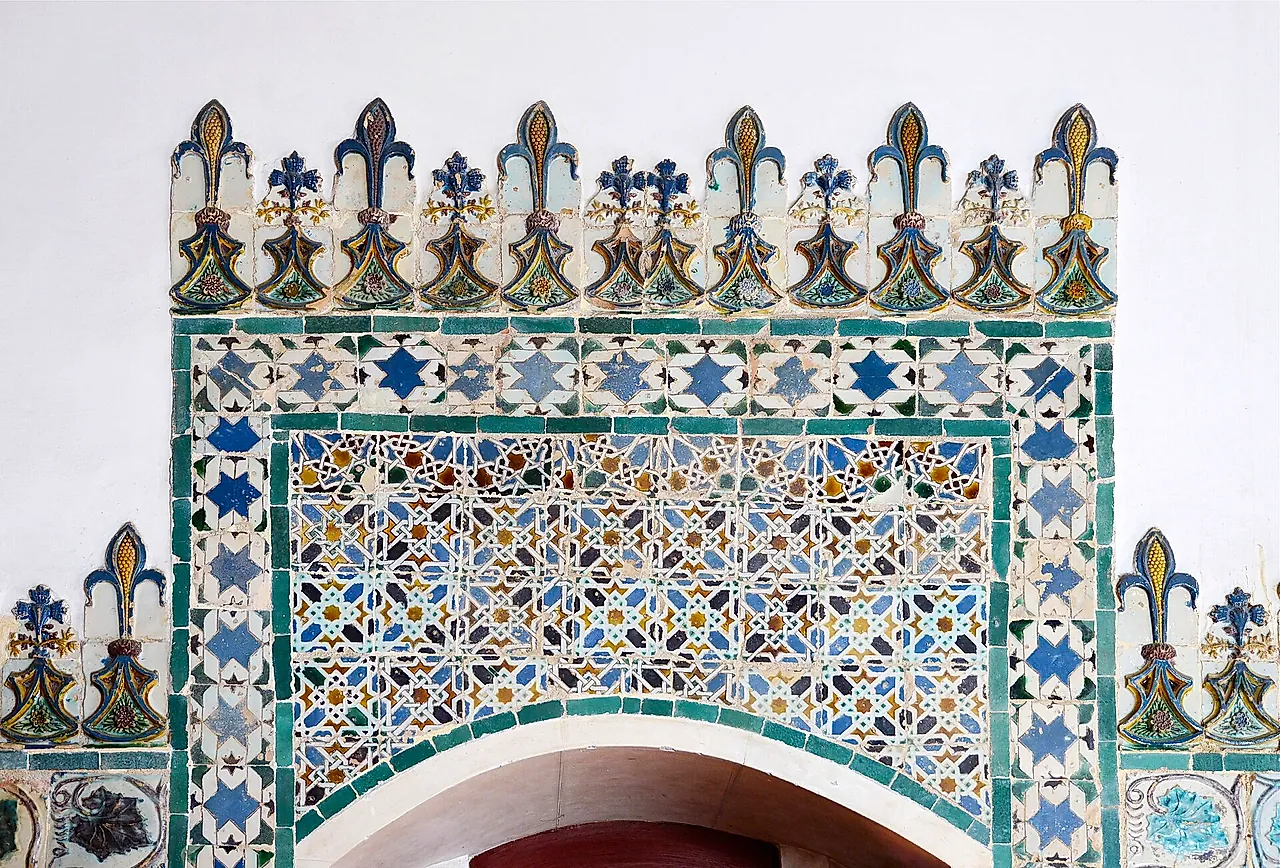
UNESCO describes the Hispano-Moorish tiles of the palace as the finest example of the Mudéjar technique on the Iberian Peninsula. The Tiqets listing makes a stronger claim, that it is the most important collection in the world, which we could not confirm. The tiled rooms and painted ceilings are delicate, so no flash.
The new rooms of Queen Maria Pia, with about 100 objects, are visited with the Full Visit in small groups.
The oldest palace in Portugal
Parques de Sintra calls it the oldest palace in Portugal, and says that its founding year remains an open question. The first building probably dates from the 10th or 11th century, under Muslim rule. Sintra passed to the Christians in 1147, with Afonso Henriques. John I (1356–1433) built the present part with the courtyard and the kitchens, and Manuel I added the Coat of Arms Room and the tiles. Maria Pia was the last royal resident, until 1910, and the palace has been open as a museum since the 1930s.